
TUTORIALS

Welcome to the COSYNE 2027 Tutorials!
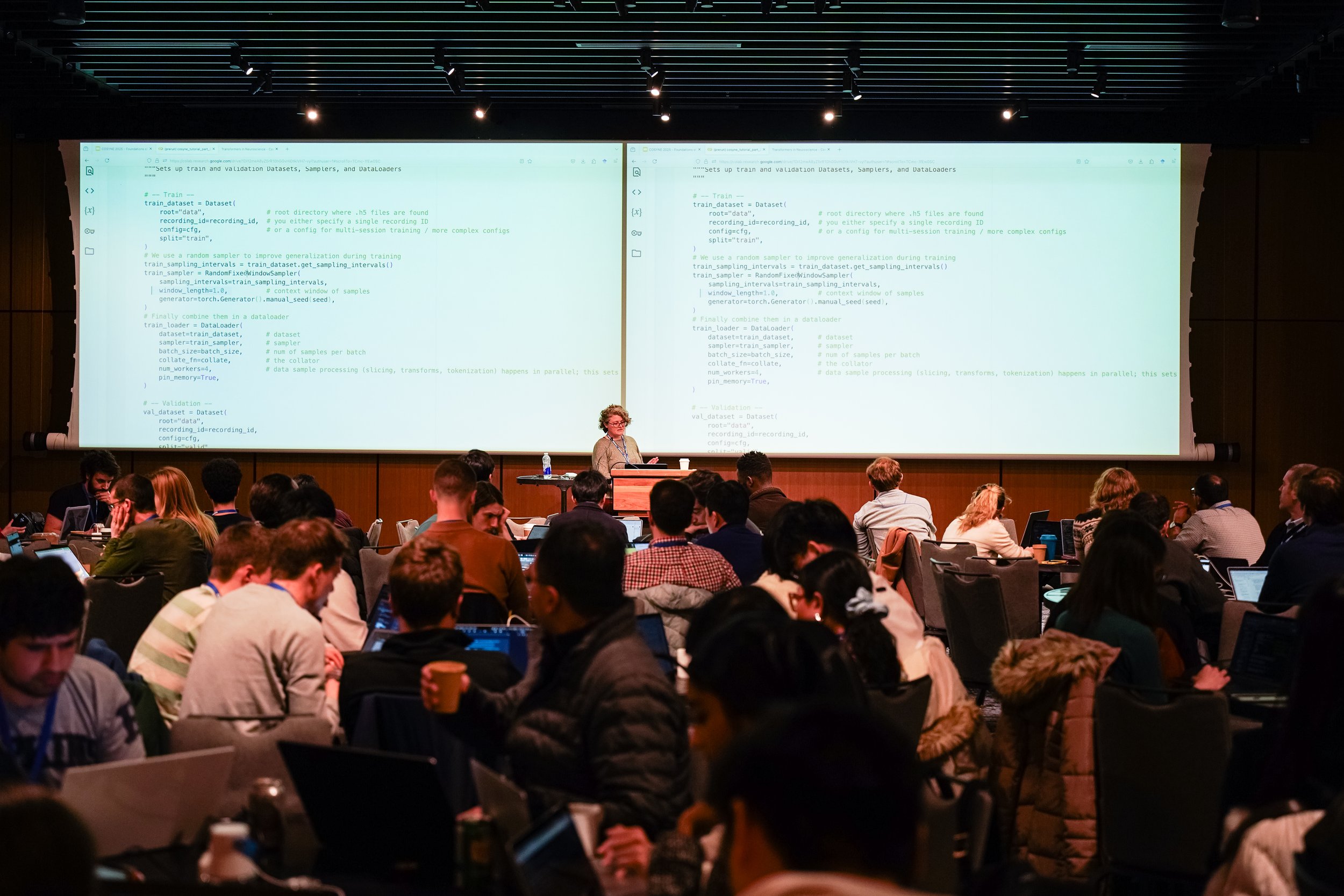
Our tutorials offer an exciting opportunity to dive deeper into key topics at the interface of systems neuroscience and computational theory. Each session is designed for researchers and students eager to expand their knowledge through hands-on learning and insights from experts in the field. From foundational methods to cutting-edge advancements, these tutorials will equip you with practical skills and a richer understanding of the theories shaping today's research.
Explore the tutorials below and get ready to enhance your COSYNE 2027 experience!
Eva Dyer and Alex Williams
Tutorials Co-Chairs, COSYNE 2027
A Neural Circuits Perspective on Dynamics, Variability, and Computation
11 March 2027 · Time TBA · Separate registration fee required.
Neural fluctuations provide a window into circuit mechanisms and play an important role in shaping neural computation. Where does this variability originate, how does circuit architecture shape it, and when does it constrain or support computation?
This tutorial will develop a historical and mathematical perspective on these questions, beginning with stochastic models of single neurons and progressing to population dynamics, balanced networks, and self-consistent theories of recurrent activity. We will examine how recurrent excitation, inhibition, and connectivity structure shape the magnitude, correlations, and dimensionality of population fluctuations. Changes in variability across sensory and cognitive states will illustrate how fluctuations can reveal the operating principles of the underlying circuit. We will connect these dynamics to computation through stimulus estimation, evidence integration, and noise-driven transitions between decision states. Throughout, the emphasis will be on linking mathematical descriptions to circuit mechanisms and computational consequences, bringing classical results into conversation with recent advances.
How to register: Space is limited, and a separate registration fee applies. When registering for the main meeting, select the COSYNE Tutorial add-on.
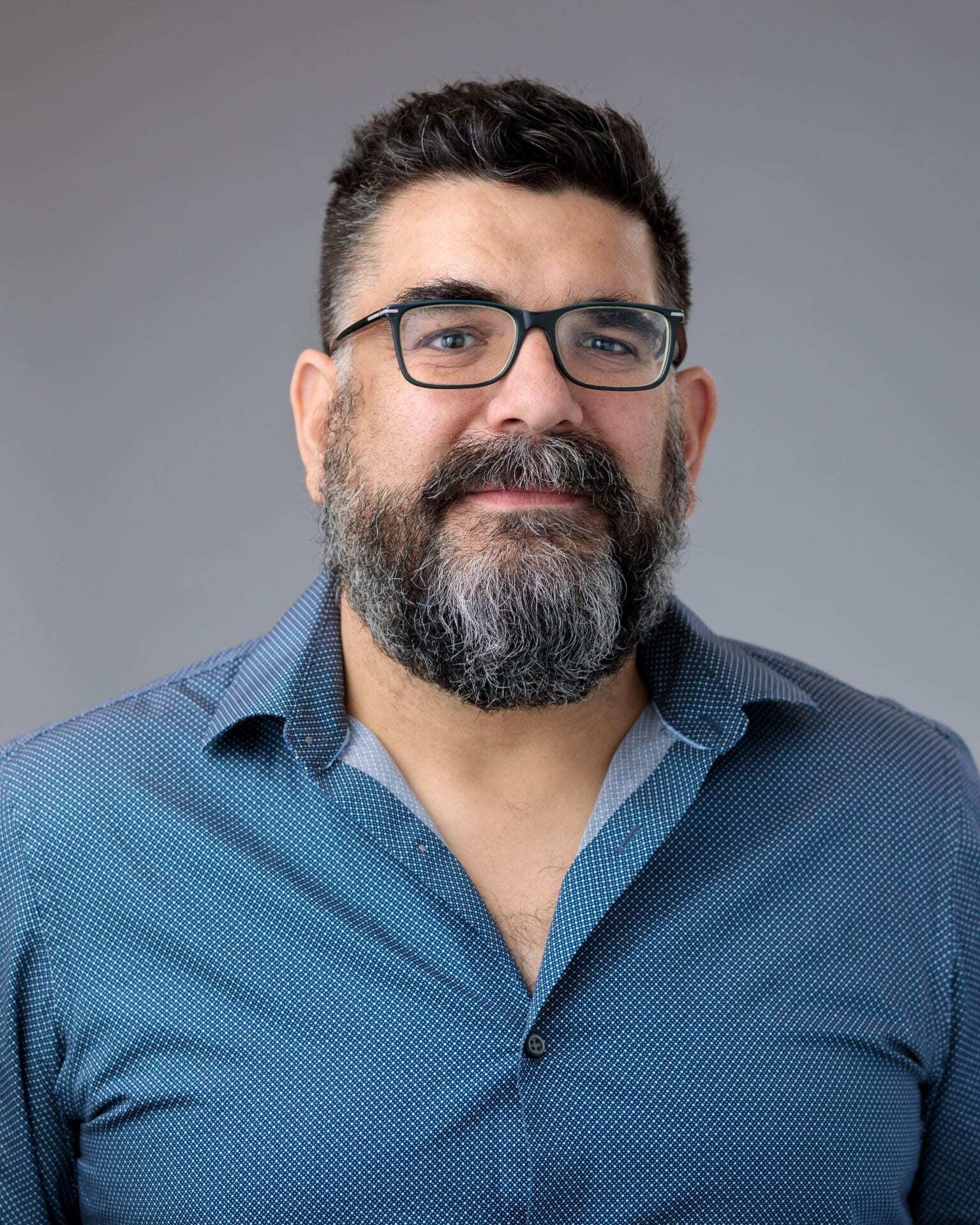
Brent Doiron
University of Chicago
SPEAKER BIOGRAPHY:
I completed my undergraduate and graduate degrees in Physics at the University of Ottawa, and later a postdoc at NYU. From 2007-2020 I was faculty in the Mathematics Department at the University of Pittsburgh, after which I moved to the University of Chicago where I am currently the Henrich Kluver Professor of Neurobiology and Statistics, and the director of the Grossman Center for Quantitative Biology and Human Behavior. My work focuses on how the complex circuit wiring of the nervous system supports rich, often stochastic dynamics, as well as drives neural computation. I have been fortunate enough to be awarded a Sloan fellowship, a Vannevar Bush Fellowship, and I am a Simons Foundation Investigator.
LLM Agents for Neural Data Analysis
11 March 2027 · Time TBA · No additional fee
CatalystNeuro
Flatiron Institute
International Brain Laboratory
Torch_Brain Team
AI coding agents can now take a one-sentence request, find a public dataset, load it, analyze it, and write up a result. They can also produce analyses that look convincing and are wrong. This tutorial walks through agentic analysis on real open data and makes the case that agents do their best work when they build on well-tested tools and standardized data.
We will cover finding and reusing data on the DANDI Archive in the NWB format, writing readable analyses with Pynapple and NeMoS, working with the International Brain Laboratory's brain-wide map, and applying neural foundation models with torch_brain and BrainWideBench. For each, we will show what agents do well, where they fail (including p-hacking and hallucinated results), and how to check their work. We will also cover how tool developers can make their software easier for agents to use correctly.
The tutorial closes with a hands-on session in which participants direct an analysis agent on IBL data. No prior experience with coding agents is needed. Bring a laptop; we will send setup instructions ahead of time.
The tutorial is a collaboration between CatalystNeuro, the Flatiron Institute, the International Brain Laboratory, and the Torch_Brain Team.
How to register: Space is limited. When registering for the main meeting, select the COSYNE Tutorial add-on.
COSYNE Tutorials are sponsored by the Simons Foundation. Past COSYNE Tutorials can be found here.